
I can’t remember how old I was when I first read There Will Come Soft Rains by Ray Bradbury. I was young, and it made an impact, as those kinds of stories typically do. This one is required reading in science-fiction canon for good reason. If you haven’t read it, go do that now; I’ll wait…
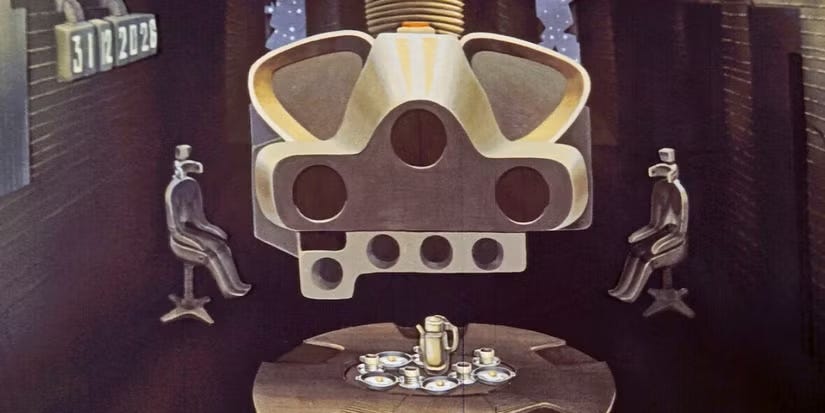
No wait, I’ll do you one better. Leonard Nimoy narrated a number of Bradbury stories for a pair of 1975 spoken-word records—all of which are worth checking out. He wasn’t the only one; Burgess Meredith did a recording, and other radio plays were made. There is a reference to it in a Fallout game. There’s an incredible Soviet 1984 animated adaptation, a perfect example of the story’s universal indictment of civilization’s escha-techno-logical death drive.
Watch that. Then listen to this: in 2015, an artist going by Zarelli (alter-ego of Carwyn Ellis) scored Nimoy’s rendition of this tale to an original album of electronic music, collectively described as “beautiful, fiery, tragic, and tense.” It is titled simply Soft Rains. I discovered the album earlier this year, and I’ve listened to it over a dozen times. On that first listen, I was startled by the reminder that the actual day the story is set on is August 4th and 5th, 2026.

So obviously I had to write about it today, the day the last house died.1 But what can be said about a septuagenarian tale which speaks for itself with the eloquence of deathless automation?
It was published in the spring of 1950 as two versions: a standalone magazine short story and as the penultimate chapter of the fix-up novel The Martian Chronicles. The 1997 edition of the book advanced all chapter dates by 31 years to fling far its future feel. Guess I’ll have to do another writeup in 2057, if we make it there. I don’t agree with the change; I think it’s important to know when Ray Bradbury believed Earth-bound society would meet its destruction when he wrote this 76 years ago.
I didn’t know There Will Come Soft Rains was a chapter in The Martian Chronicles, which I only read for the first time a few years ago. I was startled to recognize the story when I got to it. I hadn’t read it since that first time, when I was a kid, and it was like visiting an old relative whose smile you know from family photos.
It’s among Bradbury’s best: gorgeous, visually engaging prose. A stark, timeless statement. The arc of the plot is smooth, certain, moving like clockwork destiny. It’s funny and clever and heartbreaking and will remain relevant after humanity blows itself to kingdom come. If science-fiction is the mythology of the Space Age, There Will Come Soft Rains becomes a lullaby of atomic tragedy, an elegiac epitaph ringing in the voiceless dark.
For me, it’s all about the beauty of an epic event going unwitnessed. I’ve always craved literary antidotes to anthropocentrism, and scifi offers plenty of opportunities. This tale hails from an era when the genre that regarded itself as the next level of human culture and was expected to honor that legacy. That’s why so many stories and books are titled after poetry verses and snatches of great literature.
The premise of scifi’s promise was that we were carrying our household gods to the stars, like Aeneas fleeing the ashes of Troy bearing his grandfather and son, the past and the future secured in the self-reflection of the next stage of civilization. As far as certain 1950s writers were concerned, we’d be quoting Shakespeare on Jupiter’s moons, which are named for the gods in the plays of Euripides and all that shit.

Bradbury is not one of those writers, even though he injects quite a bit of classicalism into the writing to spit some shine on that spaceship. This tale is post-apocalyptic but set in a reality where we’ve already made it to Mars (and already bunked it up bad). Ray knew we couldn’t help but project humanity on our machines, and that this story would invoke complex reactions from its readers. So, what are my complex reactions?
Obviously my horror is rooted in the dead family. The house’s pointless slaving is embarrassing; its careless and senseless destruction is portrayed with an operatic tone, as if the reader has been granted an audience to the collapse of an ancient tree. Yeah, that’s good: the robotic house is the last tree planted by a race of gardeners who destroyed themselves with a different flora of doom. And it does make a sound.
I could reflect on the Hiroshima wall shadow. That horrendous real life image that inspired the story in the first place, the same image placed within the story to turn it on its tragic fulcrum. I could write about the dog scene, a heartwrenching portrait of helplessness that fostered an unconditional compassion in me as a young reader.
No. I shall write about the climax. The section is scored as “Blaze” in Zarelli’s album. It is a personal favorite style of scene: an apocalypse—a ramble of destruction or transformation or realization (all the same thing if the writer is good) that spirals out with the beauty of a ballerina’s pirouette. A successfully composed apocalypse is—to use Bradbury’s language—“a scene of maniac confusion yet unity.”
The Blaze may have been my first apocalypse as a young reader. I remember being transfixed when I first absorbed it, and that sensation returned tenfold as Zarelli’s music swept me down a river of molten metal, glass, and oak. It reminds me of other great apocalypses: the ballet narrative for Stravinsky’s Rite of Spring, the finale of the King Gizzard album Murder of the Universe, the entirety of Phil Tippet’s film MAD GOD, certain passages from Lovecraft, and an aptly titled spoken-word piece by William S. Burroughs.

At Ten O’Clock the House Began to Die…
So begins the 5:07 track at a beat faster than the previous songs. An accident sparks a fire, which the house battles to the bitter end. The writing here is breathtaking. The similes pelt you like hail. The violence is brisk and viral, consuming the house at a pace that welters tears from the corners of my eyes. I don’t know why I weep for the house; I do not project terror or suffering onto automatronic motion. The house is not alive and therefore does not “die.” But destruction still means something.
I think my grief for the house is presumptive mourning for human civilization; it’s like watching a temple collapse, signaling the extinction of an ancient religion. The conflagration ends an entire way of life, echoing with a silence louder than the expiration of any single organism. I think this vector of overly automating the experience of human life is foolish, and this house exemplifies it. But I don’t cheer its destruction; I think “what a waste” with all due despondency.
I believe the family wasn’t much alive to begin with. Bradbury made it clear what he thought of automation in other stories involving death and destruction. The other one Leonard Nimoy narrated for this record was Usher II, also taken from The Martian Chronicles. It’s a Poe ode (or Po’de) about a man using perfectly lifelike robots to recreate scenes from Gothic literature in order to trick, trap, and massacre a bunch of stuffy censors—another wonderfully apocalyptic ending in tribute to the story’s namesake.
The second Bradbury spoken-word record features two tales from the book The Illustrated Man (1951). Marionettes Inc. is standard robot horror fare: people replace their loved ones to get a break from them, and uncanniness ensues, natch. In The Veldt, also narrated by Nimoy, a pair of children use their holodeck playroom to dominate (and possibly even murder) their own parents. The house in Soft Rains also has a holodeck playroom that also conjures an African veldt & jungle.
Even if the bomb hadn’t got ‘em, the logic here is that technology morally bankrupts its users to the fatal extreme. In submitting to the machine, the family became its squishier cogs, necessitating the house’s idiotic tautology. Before the boom, the family’s lives had been a conveyor belt of comfort with no meaning. The ease of automation worked too well, gliding its creators into a frictionless Beyond that they always dreamed of… except the nuclear fission.
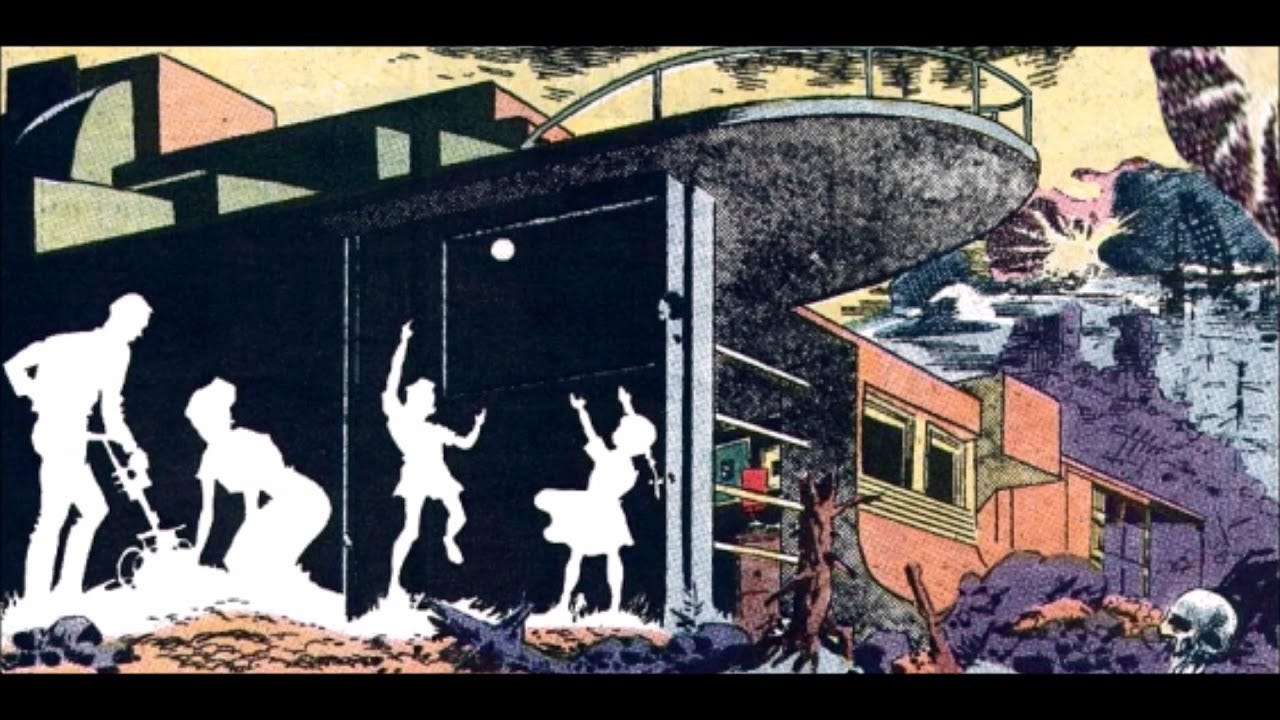
The house’s death feels like nature’s revenge. If we are going to project emotionality on a soulless thing, then the fire that murders it should be given the same honor. The burning is constantly described as eating, feeding, devouring. The house’s attempts to defend itself turn the struggle into a battle with all the drama of a chase in the Serengeti. It’s exhilarating to listen to the suite with Zarelli’s sonic adornment. The synth beats pulsate the psychopathic breakfast-making; the waves eulogize the burning jungle playroom; Nimoy’s voice embellishes the house’s cries of desperation as it spirals toward its doom.
The line about the voices dying “like children in a forest, alone. Alone.” The line comparing the spasmodic robotics to the “maniac confusion” of a clockshop. It’s all so beautiful and overwhelming. My heart buckles in sync with the house’s collapse. An unworshipped temple becomes a tomb with no corpses, no purpose. After the tragic struggle of machine against Mother Earth’s cleansing fire, this teleological apex of humanity’s multi-millennial pursuit of pleasure is terminated with all the pomp & circumstance of a wasp nest shattering on the forest floor. Alone.
When “Blaze” ends, the next track closes out the story. It is titled “August 5th 2026.” All that is left of the house is a wall à la Ozymandias and one last automated voice, stuck in a loop, declaring the date it all ended. This day. Now is the envy of all the dead. It’s a damn good story, and Zarelli’s album is a perfect tribute. Happy Soft Rains Day, dear reader. Sleep tight.
Guess what? By reading this far, you have been chosen to get exclusive early access to the PRE-preorders of my original comic book, I COME FROM VENUS: 28 full-color pages of weird science-fiction & acid punk action written by David Kane illustrated by Jorge Peña.
Preorders for this limited run will end on August 23rd. I’m planning a splashy announcement soon, but you, Dear Reader, can skip the line right now.
Enjoy & thank you for your support.
- In the Soviet short film, they changed the date to December 31, 2026. Guess I’ll do an additional writeup for New Years… ↩︎

