
If you would like to explore this author before reading my sycophantic drivel, you can dive into their professional website: horrorsong.com
I appreciated the well-researched piece in Neo-Passéism’s Substack about the legacy of Weird Fiction, written by Colby Smith // YUUGENPRAXIS. It juxtaposes well with this essay in Strange Horizons by Zach Gillan, who has spilled much ink over the Weird’s journey into the 21st Century.1
Both writers examine the definition of Weird Fiction as it stands today. The didactic split to wit: a genre is usually defined by an internal logic shared with other iterations of its species. We deconstruct a story’s recognizable patterns and stamp them with clear definitions—here’s magical realism inspired by the African pantheon, here’s aquapunk science-fiction social-satire, here’s lesbian clown-fetish psychothriller, etc.
When it’s true to its namesake the Weird endeavours to shake up this model and deliver a genre with more gelatinous borders. When you simplify it as much as possible, a successful Weird tale actually weirds you out. This means everyone has a unique approach to reading and writing the stuff, and few of us are able to agree on the “best” way to really nail it down. True believers rejoice at this, declaring the Weird as that which refuses to be nailed down at all. Eat your heart out, Jesus Christ!
All this to introduce the subject of my piece: Joe Koch, an author of many tales offering what I consider high quality Weird Fiction. I discovered Gretchen Felker-Martin and Hailey Piper around the same time, and encourage you to explore their work as well.2
The “literary horror & surrealist trash” logline is of Joe’s own invention intended to strike a balancing act between pride in the work as dignified prose poetry, while jocularly acknowledging its low station in the scrum pile of embarrassingly horny queer monster-fuckery. I assure you Joe is too humble. By the originally stated definition, his work truly did weird me out.
I’ve always believed that a properly eldritch atmosphere should be as alienating to the reader as possible without losing them. If Carcosa consciousness really is a mind-fuck, then the simple act of absorbing the story should presents a challenge. I believe the reader should fear pataphorical infection. A good Weird tale dooms its victims as bewebbed flies getting their goo sucked into God’s prolapsed anus via a proboscal time-warp enema. A risky needle to thread for any writer.
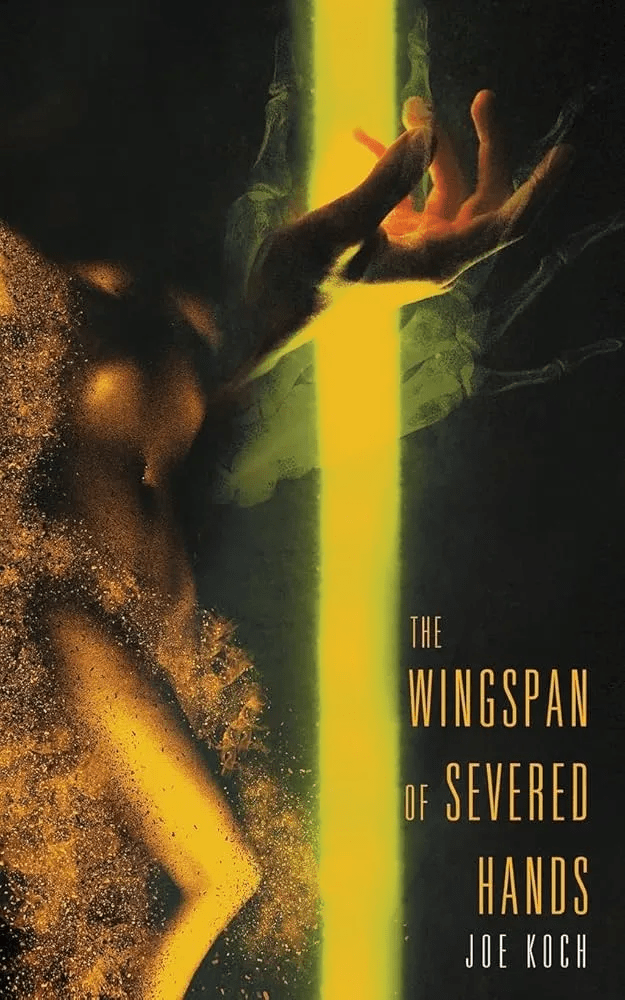
The first of Joe’s spawn I swallowed was The Wingspan of Severed Hands (2020), a novella published by Weirdpunk Books3. I consider it a very good place to start. What begins as a digestible cosmic horror concept sloughs off like dead skin to reveal its true form: a spiraling constellation of psychocelestial invasion.
It’s fucking groovy, too. Here’s the passage where I fell in love with Joe’s words.
Puppet perceptions lost meaning in the greater universe. The strong, soft tentacles lifted Adira by the neck, and with joyous disintegration her mind shook apart and spread through the rest of her body, brain dripping down in shattered globules, filling her with the black wisdom of idiocy, rising up in gold tears that drowned her button eyes. Her vision went liquid. Her body was a maelstrom of minds. The nub of a thick tendril bulged with yellow mucous and slipped inside her and swelled. She thrust at it, pungent and warm, dancing marionette, and swallowed the otherworldly arm. Unthinking, she tugged and extracted the starry organism from the cleft of its companion lair. Two more tentacles followed, slipping, prodding, and then disappearing inside her, consumed by Adira’s instinctive thirst.
The stranglehold on her neck went slack. Adira sucked down the last writhing arm with a wet slap.
Startled by the sound, her mother swung around.
She yanked her knotted skirt. “Why didn’t you tell me I was standing here bare-assed? Get up and put these dishes away. Do I have to do everything in this house myself?”
And this is just the beginning. Scenes are confusing. Clauses shift shapes, altering the context of a sentence. There are moments that I need to reread: the imagery gets too densely packed, the word choice too esoteric. The scenes become dreams I fumble to recall in the morning fog before realizing I’m caught in the dream’s areola as it discharges me like milk from a fetid tit.
And that’s the other thing: things get gross. Lots of gore necessary to earn the Horror sticker. Things turn uncomfortably sexual, and then to complicate matters, the perverse sexuality arouses the reader in ways they weren’t expecting. The word “intimate” comes up a lot when people discuss Joe’s Horror. Its the key to this successful distillation of cosmic horror: make it feel extremely personal to the reader, an inescapable confrontation of inner and outer consciousness. The character is flipped inside out, and the reader is invited to put out to the story, expose their own filthy innards and share in the horror and the beauty. Be consumed or transcend and discover it’s the same conclusion, the same toilet hole at the end of the cosmos.
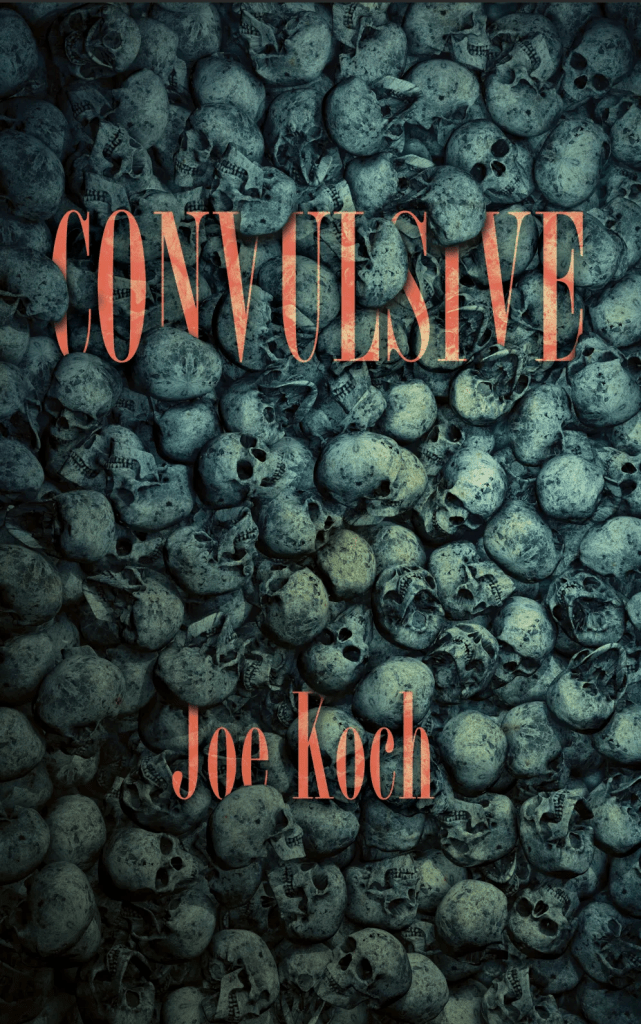
Then came Convulsive (2022) published by Apocalypse Party. This short story collection samples a wide range of Joe’s style. Lots of gorey queer nightmares and smutty sacrilege. Lots of commentary on the trifold relationship between art, artist, and audience. My favorite story is “Aristotle’s Lantern.” As far as I can glean, it’s an absurd description of an ultra-violent snuff film of dubious veracity.
Frames shuffle like cards. The viewer feels disoriented, a kidnap victim when the hood comes off. Attrition subverts narrative lucidity due to incompetence or cinematic design. The result is that the viewer is forced to work harder to follow the shattered plot and is exhausted into submission. If they don’t walk out in rage, they accept their passive stance and let the violence wash over them. Likewise, Adrasteia, in the role of her death-time, grinds downward from denial to grasping, from savior to grave. Her head seeks a hero, awash in nihilist disbelief. No way out. Nothing she’s done to deserve this. Her fatal mistake was being born.
There’s a line in this story that has stuck with me since I first read it four years ago—I dread to repeat it here4. When you read the story, you’ll find line after line that you’ll assume must be the one, but I assure you it’s not what you expect. The leaking syphilitic pricks are child’s play. The sentiments that hit the hardest must be experienced in context. The words flow so specifically, like an incantation. One syllable out of place and the whole structure will collapse like a sordid souffle.
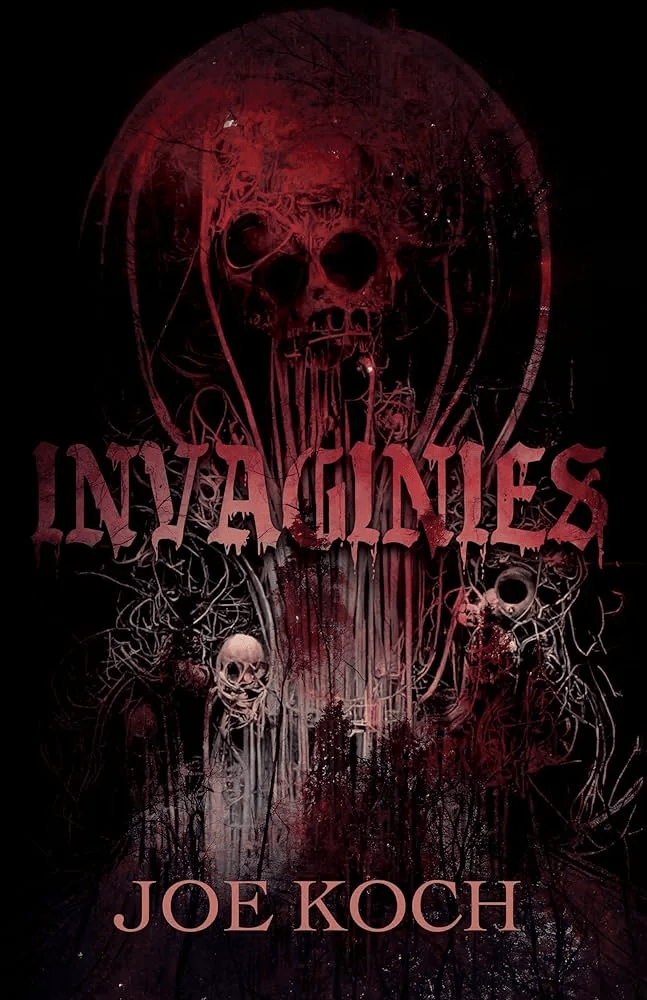
And then there’s Invaginies (2024) by Clash Books. Favorite story: “Convulsive, Or Not At All”, a title that reads like an emphatic insistence, as if you didn’t understand his previous book and need it reiterated. Over 11 pages Joe traces a mythopoetic epic across five millennia, from Pleistocene twilight to the divine deformed fetus at the end of the universe. He mines meaning from the raw, heaving void. No quote this time. The good ones might actually get me into trouble. Plus the point is to entice you. Taste a bit of the drip and see if the tongue stings for more. Me? I’m parched.
Colby Smith’s Weird Fic piece vivisects every post-Ligotti Lovecraftian Weird tale into five categories, the most relevant of which is “faux-Surrealism,”5 a broad, somewhat dismissive diagnosis for all the hopeful weirdos out there. Sure, Sturgeon’s Law still applies to the deluge of New Weird, but what happens when you really pry yourself loose and listen…
For me, Joe’s writing opened the true potential of Weird Fiction, which scholar Kali Simmons describes as “a suspicious critical method that seeks to unmake hegemonic realities.” I had sought a tool to disrupt my preset patterns, unhinge and wheel me in a new direction. I decried my own rigid expectations for where a story could go, what it could do, and I wanted some free radical to come and divert me into impossible shapes. Joe did that. His stories are muscular, flexing dazzling sensations into the eyes. The spaces between the sentences are ultra-complex capillary systems delivering subliminal nutrients to ever-infinitesimal systems behind the rods and cones.
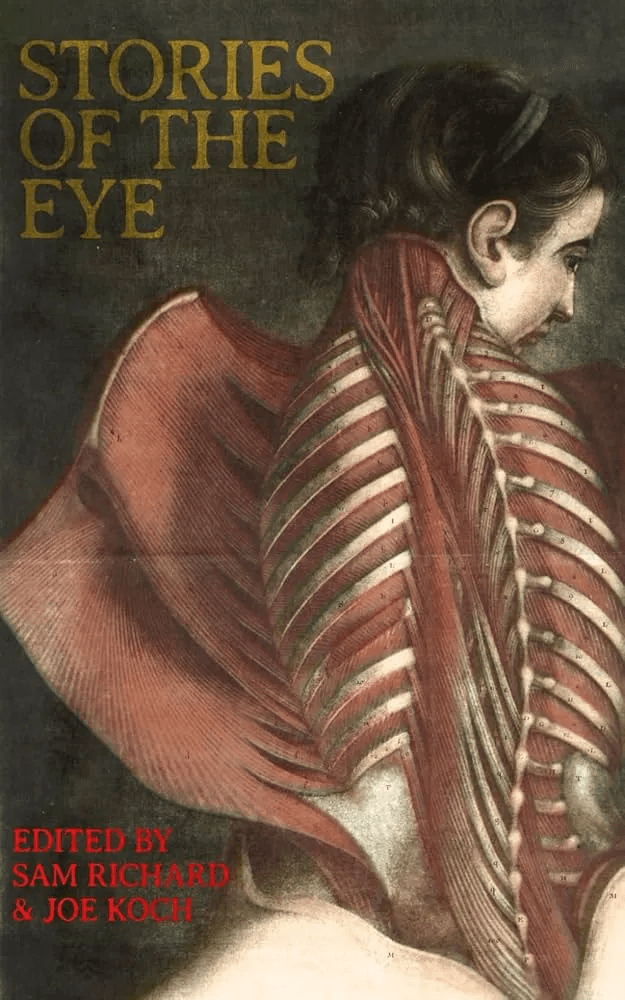
Also for Weirdpunk Books, Joe co-edited an anthology Stories of the Eye (2022), which fixates on art & artists (sound familiar?). Joe contributed the story, “All the Rapes in the Museum” which was republished in Invaginies. This one is a real piece of work, indeed literary horror & surrealist trash. At times excruciating to read (complimentary), all building to a climactic transcendence. The plot describes a prison that could be a metaphor for the history of civilization or a cathedral pupating a new saint through sanctified torment. Alas, I can’t do it justice. Again, like a dream clumsily recollected, my interpretation shaves off the inimitable awe of the raw subconscious pageant. You’ll just have to read yourself.
Joe said the title was inspired by the legacy of the word “rape” in art history. In titles and descriptions of art (particularly those depicting Greek mythology) words like “seduced” and “abducted” are euphemistic sheens awkwardly shielding the audience from the sexual violence central to many a myth. The trauma of the act and even the recovery from it are excised in favor of defending our cultural memory. Defending it from what? Its own salvation, perhaps. Joe’s story rips the covers off, exposing the naked truth, as all art must do. We need to know. We need to feel. All lies must be bleached out with white hot painful awareness. The painful art loves us more the balmy stuff.

Weirdpunk Books also released Feral Architecture: Ballardian Horrors (2023), an anthology of shorts styled after J.G. Ballard. Joe’s contribution is a banger: “Paranoid Cancers of a Demented Eros.” A blender of material capturing Ballard’s voice pre and post dead wife, plus some zesty polyps à la Papa Cronenberg.
I love this one. Psychedelic sci-fi depicting a viral syntheticarcinomal manifestation enmeshing states of matter, infesting dead matter with the irrational logic of the unconscious. The psychogeometry calls to mind Ballard’s Vermillion Sands (1971), and the numerous segment titles6 doff the cap to The Atrocity Exhibition (1970). In this passage, a heroic character is battling the villain’s cross-contamination of space and self.
Monuments toward a Cathartic Future
The abandoned office park teemed with diseased architecture. From a distance, the chaos of prone, thrusting support beams and interpenetrating deformed cubes assumed the appearance of an orgy among concrete giants.
Martine’s jeep lurched quickly like a colony of disrupted amoebae, tiny in comparison, aimed at the base of the thin black spire rising from the reflecting pond. It spun like crystallized oil, black blades slicing the roar of deconstruction into silence.
The crash was also silent.
Martine rolled out of the jeep as it careened into the eye of the cataleptic void. As if evolving in slow motion, her organic brood extruded the emptiness of the starry gaps and filled it with transitional spaces less hectic. Conscious thought, flickering with the logic stability of death, broke the loop of projections and collapsed myriad pan-directional images into a single and separate endpoint.
The razor tower reversed into a cone folding in on itself. Steel columns stilled against diagonal imperatives. I-beams capitulated. The exposed steel skeletons of the buildings hardened into normalcy. Floors and walls ceased bending and funneling into a visual nonsense of disassociated angles. Rooms settled into approximate squares.
Maybe Joe’s secret to pull all this off is a necessary dose of self-aware humor dashed in to cut the dead serious phantasmagoria. There are actual jokes couched between the tragic peaks. A detached tumor nurses on a woman’s breast, for Christ’s sake. Joe knows that surrealism is downright goofy, and that the reader needs a little leniency. He takes care of us; again, the intimacy of the writing. Painful stories as loving organs suckling us with the milk from the artist’s ghostly impression. The artist, art, and audience as ménage à trois (an erotic act you’ll find represented in “Paranoid Cancers of a Demented Eros”).
In 2007, Ballard himself mused on the project of The Atrocity Exhibition: “I think I was trying to look for a kind of new logic that would explain all these events.” Not just his dead wife, murdered by the universe. Not just Kennedy, murdered into mystery. Not just the ‘60s rotting into the ‘70s, Ballard wanted to know why we are like this. Crack that suspicious critical method that seeks to unmake hegemonic realities. We’re getting closer, can you feel it?
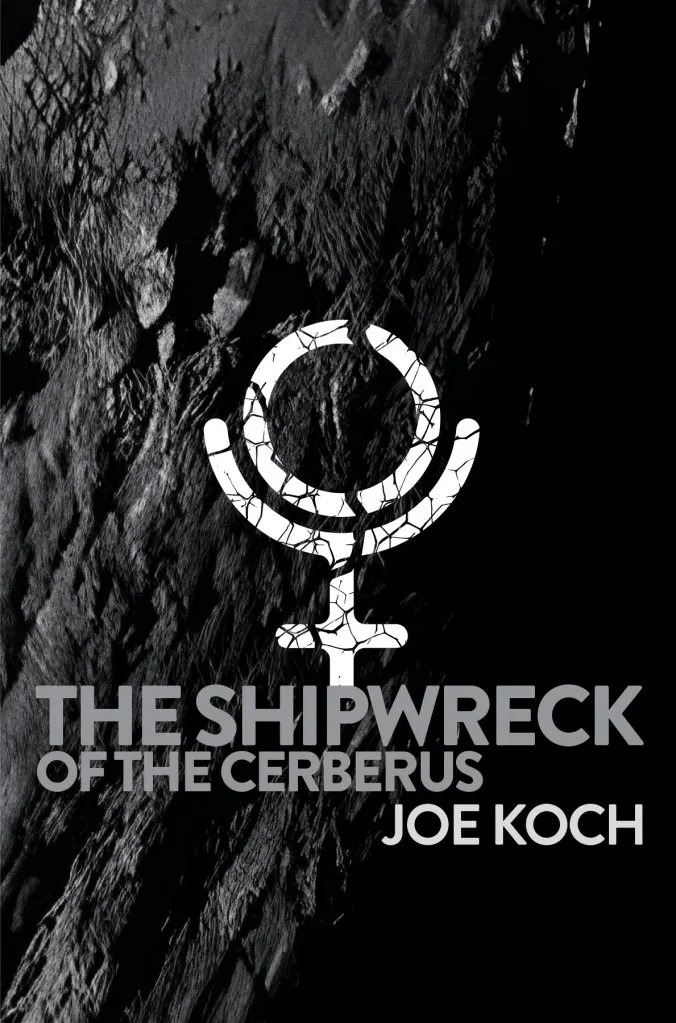
I was proud to nab The Shipwreck of the Cerberus, a limited edition novelette Joe made to give out at a convention in 2023. The legal page reads: “Hades, snatcher of all things, shall upon ye lay his hand.” The chapters are numbered in reverse, counting down the moment a (space?)ship experiences a cataclysm that’s difficult to piece together. There’s a gay golden head that a guy makes out with. I lent it to a friend recently who said, “It’s clearly a release for a lot of things. There’s weird kinky stuff in there. I don’t know what to make of it. It’s just what’s inside him.” And now it’s outside him. And now it’s inside you.
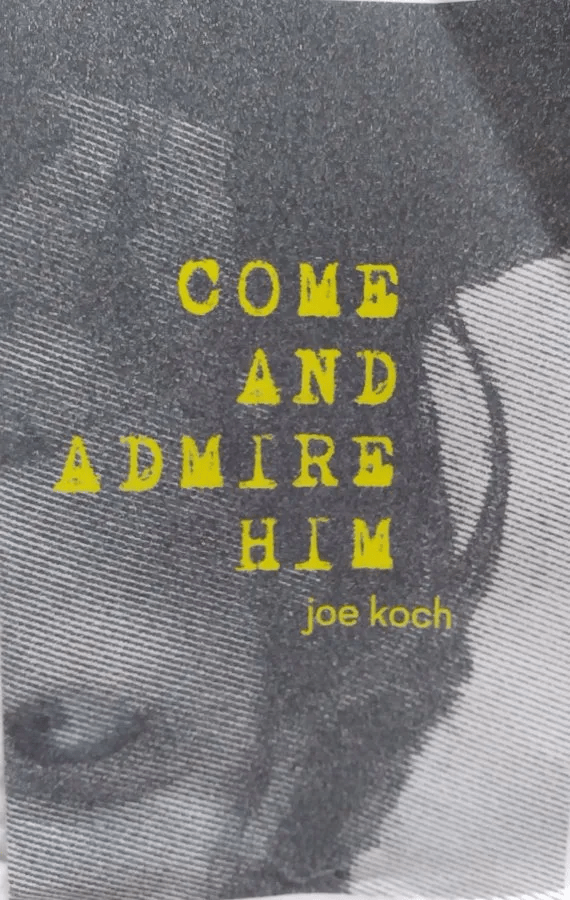
I haven’t read The Couvade (2019) yet (sorry, Joe!), but from what I understand it’s a lesbian werewolf thing in case that floats your scrote. BUT there’s Come And Admire Him (2024), which you might never read. This limited run zine amounts to gay necrophiliac fanfiction about Andrzej Żuławski’s film Possession (1981). Here, Joe is literally fucking around. The legal page includes the passage, “Please do not attempt to birth the antichrist without the assistance of adequately trained clergy, physicians, or occultists.”
In contrast to the horror, the filth, the grief, it’s actually the humor, passion, and joy that secures Joe’s true greatness. If a work of art is an invitation, then Joe’s writing is a flasher’s trench coat, revealed as curtains of skin exposing the musculature of the underworld. The artist exposes themself via the art, which becomes a separate living organ the audience uses to commune. We are invited to share in the fun of getting weirded out together, which is actually weirding us in together. Squat in the coral with us. Feast on Father.
This surrealist trash glitters like a candy wrapper in the gutter. It’s pretty and disgusting and totally worth the price. As Oscar Wilde said, “We are all in the gutter, but some of us are looking at the stars.” Joe is guiding our eyes to the starry orgasm; he knows that, even as we gaze at them, they’re simultaneously inside us, white hot and burning in our loins.
The words probe you—gently at first, testing, exploring—then you wade deeper, and they pass through the cracks in the lens of your understanding, slide into any orifice they can. Hook ya deep, drag ya down. Do you love it? Does it love you? Doesn’t matter. You’re here in its clutches, in the flesh, full foul in its fury, making you privy to the secrets of the universe, regardless of your ability to comprehend the angelic language. Groovy, grubby, gross. Good.
Thank you for reading. I hope I have inspired you to check out one or more of Joe Koch’s works. Joe and Weirdpunk Books are based in Minneapolis, so please consider purchasing one or more of their products to support that community. I asked Joe to provide any resources to help people out in Minnesota, and he gave me the links below. I hope you consider donating or finding another way to support.
- Donation link for Minnesota families Rent Relief.
- Information and resources for the Immigrant Defense Network.
As always, safe out there in the wasteland, friends & fiends.
- Zach Gillan wrote another essay: Reading Weird Fiction in an Age of Facism that I strongly urge you read as well. Zach is not on Substack, but follow him on Bluesky for more great Weird scholarship. ↩︎
- All of these authors are trans if that gives you an easy snapshot of contemporary Horror. ↩︎
- The first edition was published with Joe’s deadname on the cover, making it a rare cursed artifact. ↩︎
- I’ll give you a hint: it’s on page 51. ↩︎
- more like “fucks surrealism!” Yes? No? ↩︎
- Among my favorites are “Bloom Times in Persephone’s Limbic System” and “In Obsidian Monarchies, Our Infection doth Glitter” Gah-roooovy. ↩︎

